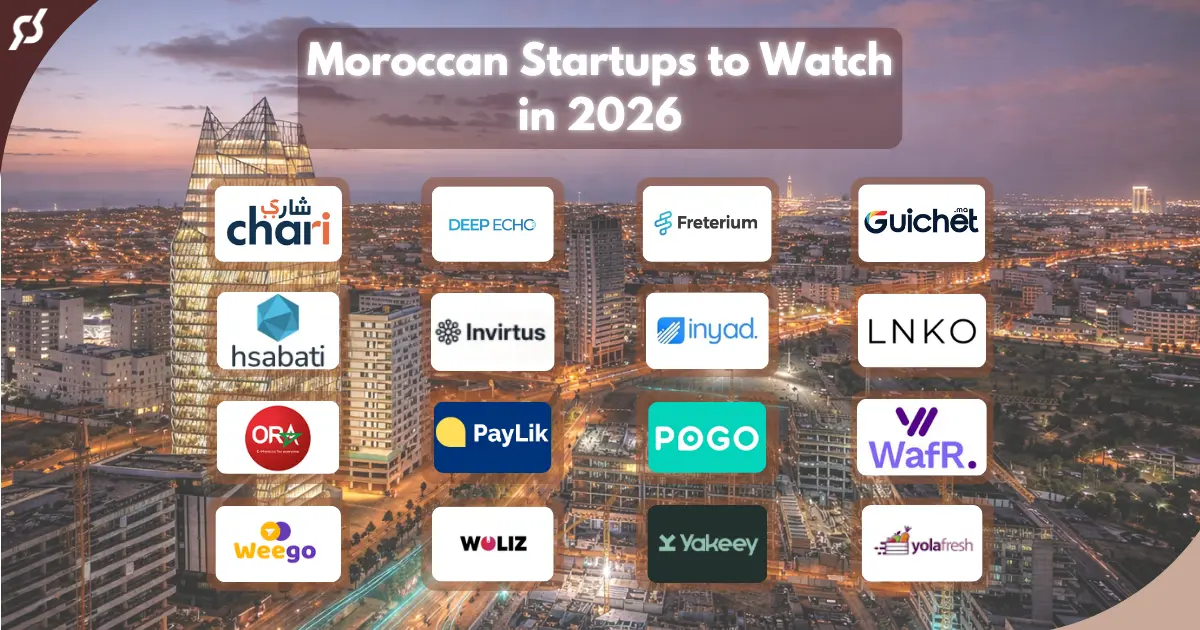
Morocco is entering a new phase of entrepreneurial maturity in 2026, transitioning from a nascent emerging market to a sophisticated regional hub for technological innovation. This evolution is characterized by a shift toward high-impact solutions in fintech, logistics, and artificial intelligence, deeply rooted in the country’s specific socioeconomic landscape but engineered for international scalability. The current ecosystem reflects a strategic focus on the digitalization of traditional trade, the modernization of essential infrastructure, and the adoption of advanced data science to solve complex systemic challenges.
Chari
Continues to redefine the B2B e-commerce landscape by bridging the gap between traditional retail and modern financial services. Having secured a landmark payment institution license from Bank Al-Maghrib and a $12 million Series A round in late 2025, the platform now services over 25,000 neighborhood grocery stores. Its trajectory in 2026 is marked by the integration of embedded finance, allowing small shopkeepers to access credit, insurance, and digital payment tools that were previously out of reach, effectively turning corner shops into neighborhood financial hubs.
DeepEcho
Represents the pinnacle of Moroccan healthtech, achieving a global milestone with its FDA 510(k) clearance for AI-powered prenatal ultrasound software. The company utilizes deep learning to automate the identification of fetal views, enhancing diagnostic accuracy in maternal care. In 2026, DeepEcho is demonstrating how Moroccan-born AI can address critical healthcare shortages and improve maternal-fetal outcomes on a global stage.
Freterium
Serves as the backbone for transport management across multiple continents, offering a cloud-based platform that optimizes the end-to-end logistics cycle. With a client base stretching from the UAE to Indonesia, the startup addresses the volatility of global supply chains through real-time visibility and predictive analytics.
Guichet
Remains the leading digital platform for ticketing and event management in Morocco, covering sports, cinema, and major cultural festivals. By digitizing the ticketing experience, it has provided the entertainment industry with crucial data on consumer behavior and demand. In 2026, Guichet continues to expand its feature set to include integrated marketing and access control, reinforcing its position as the primary gateway for Morocco’s growing leisure economy.
Hsabati
Provides a specialized B2B SaaS management platform designed to help Moroccan SMBs manage their operations and access working capital. By integrating accounting, invoicing, and financial management into a single interface, it addresses the administrative hurdles that often prevent small businesses from scaling. In 2026, Hsabati is recognized for its contribution to the formalization of the economy, providing the digital trail required for businesses to secure institutional financing.
Invirtus
Is solving the talent acquisition bottleneck through an assessment-first AI solution that automates the vetting process for technical and professional roles. In an era where skills-based hiring is becoming the global standard, Invirtus provides fast and accurate evaluations that bypass traditional resume screening. Its relevance in 2026 is driven by the high demand for specialized talent and the need for companies to reduce hiring bias and time-to-fill.
Inyad
Has successfully transitioned from a domestic pilot to a significant regional player, expanding its merchant management solutions across the MENA region and Turkey. After securing $14 million in cumulative Series A funding, the platform provides thousands of merchants with the tools to digitize their inventory and sales. Its relevance in 2026 lies in its ability to export Moroccan software expertise, standardizing business operations for SMEs in diverse and complex markets.
LNKO
Is disrupting the eyewear industry through a direct-to-consumer (DTC) model that combines high-quality products with digital accessibility. Following successful funding rounds, the brand has scaled its presence across the region. In 2026, LNKO stands as a prime example of how Moroccan startups are successfully utilizing e-commerce to challenge traditional retail monopolies through brand-building and customer-centric technology.
ORA Technologies
Has rapidly ascended to a leadership position within Morocco's "super-app" race, bolstered by a record-breaking $7.5 million local Series A funding round. Through its food delivery vertical, Kooul, and its social mobile wallet, ORA Cash, the company is tackling the challenge of digital inclusion for the broader Moroccan population. ORA has successfully positioned itself as an all-in-one digital ecosystem, leveraging high user retention and a diversified service offering to capture a significant share of the domestic digital economy.
PayLik
Has emerged as a leader in the "Fintech-HR" niche, offering an on-demand pay platform that enhances financial wellness for employees. Backed by institutional investors like CDG Invest and UM6P Ventures, the platform allows workers to access earned wages instantly, reducing their reliance on predatory lending. Its success in 2026 highlights a growing trend among Moroccan corporates to adopt digital tools that improve employee retention and social responsibility.
POGO
Is a pioneer in sustainable urban mobility, offering a platform for the rental of electric scooters and micro-mobility vehicles. As Moroccan cities strive to reduce their carbon footprint, POGO provides a practical, eco-friendly alternative for short-distance travel. By integrating a fully digital 'phone-as-a-key' experience and a transparent pay-per-minute model, the startup has successfully democratized access to green transit across cities like Fes, Rabat, and Ben Guerir.
WafR
Is playing a central role in the fintech sector by driving retail loyalty and digital payment adoption through its rewards-based platform. Having raised $1.5 million from a diverse group of global investors, the startup facilitates a more direct relationship between FMCG brands and traditional retailers. Its growth in 2026 reflects the increasing importance of "retail-tech" in capturing consumer data and incentivizing the shift away from cash in the informal economy.
Weego
Is at the forefront of the Mobility-as-a-Service (MaaS) movement in Morocco, optimizing urban transport flows through a data-driven app. By integrating various modes of public and private transport, the platform addresses the complexities of commuting in rapidly growing cities like Casablanca. Its trajectory in 2026 is aligned with the national push for smart city infrastructure, focusing on improving the efficiency and connectivity of urban mobility.
Woliz
Entered 2026 with strong momentum following a $2.2 million investment from Sanlam Maroc to modernize the traditional retail sector. The startup provides connected Point of Sale (POS) systems to small shops, allowing them to compete with modern supermarkets through automated stock tracking and income verification. This focus on "digitizing the hanout" is a key theme of the current year, empowering micro-enterprises with the data infrastructure necessary for growth and bankability.
Yakeey
Is transforming the traditionally fragmented real estate market through a comprehensive AI-driven marketplace that emphasizes transparency and efficiency. Its strategic partnership with Umnia Bank has introduced the "iBuying" model to Morocco, allowing for near-instantaneous property transactions and firm offers within 48 hours. This integration of fintech and proptech is proving essential in 2026, as the platform streamlines the home-buying journey for Moroccan families and investors through reliable, data-backed estimations.
Yolafresh
Is a dominant force in the agritech sector, streamlining the fresh produce supply chain by connecting smallholder farmers directly with retailers. By removing unnecessary intermediaries, the platform ensures better margins for producers and fresher products for consumers. In 2026, its model is increasingly seen as a vital solution for food security and price stability, leveraging technology to build a more transparent and sustainable agricultural ecosystem.
The progress observed in 2026 suggests that Morocco is no longer merely a market for imported technology but a creator of solutions with regional and global relevance. This generation of startups demonstrates a sophisticated understanding of how to leverage data to solve structural inefficiencies. As these companies continue to scale, they are likely to play a pivotal role in the country’s broader economic transformation, positioning Morocco as a competitive player in the global digital economy and a vital bridge for innovation between Africa, the Middle East, and Europe.