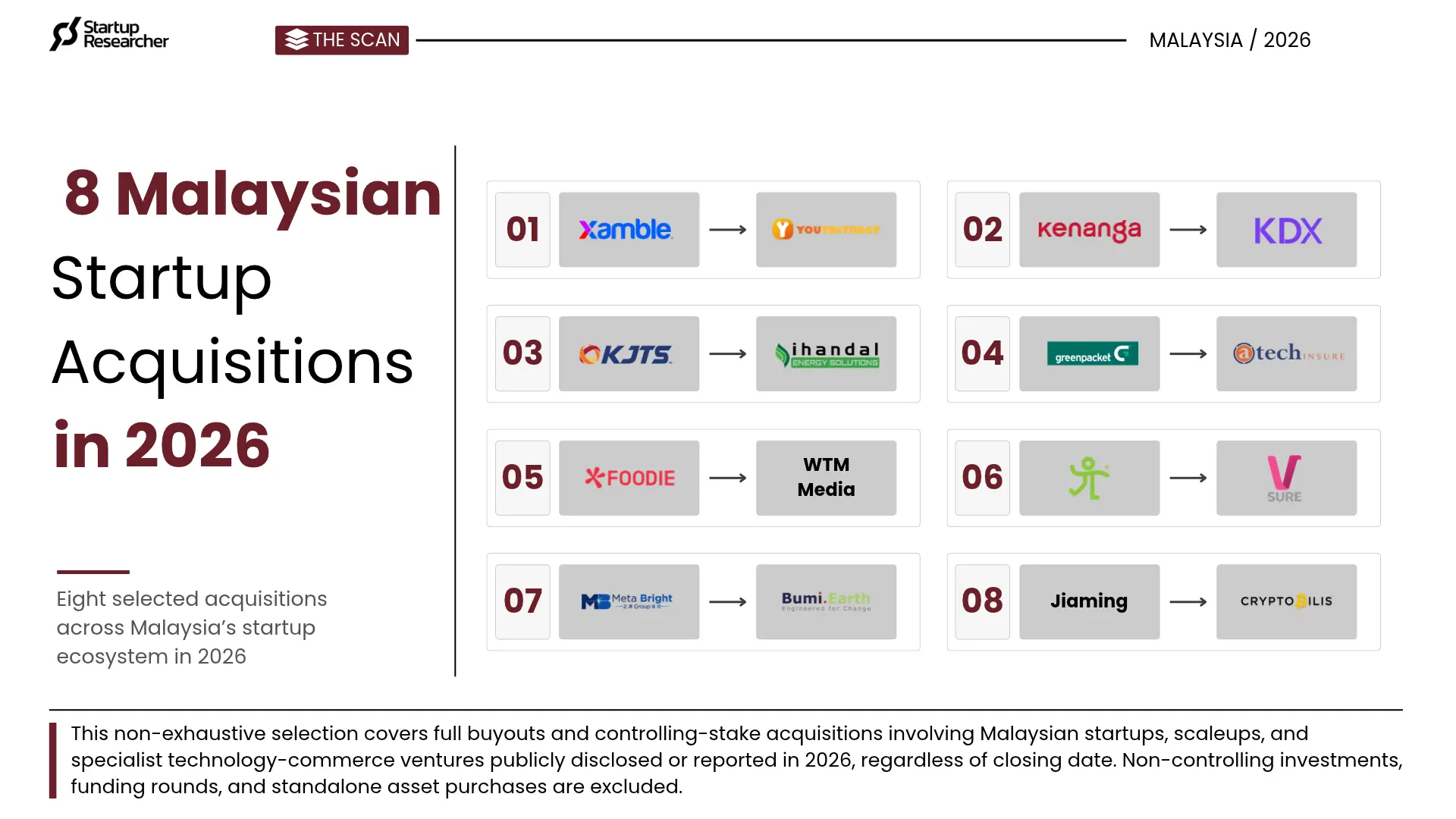
This edition of The Scan highlights eight selected acquisitions involving Malaysian startups and scaleups publicly disclosed or reported in 2026. The transactions span sectors including insurtech, energy efficiency, digital assets, creator commerce, and digital media, and include full buyouts and purchases of controlling stakes.
Methodology
This edition of The Scan features a selection of 8 acquisitions involving Malaysian startups and scaleups publicly disclosed or reported in 2026. The selection includes full buyouts and purchases of controlling stakes. Both completed transactions and signed acquisition agreements qualified, including deals subject to regulatory approvals or other closing conditions.
Eligible targets were independently founded startups or scaleups primarily rooted in Malaysia’s startup ecosystem. This included specialist technology-commerce ventures serving emerging markets, even when their business model centered on retail or distribution rather than proprietary technology development. Startup Researcher assessed that connection through each business’s founding history, principal operations, and established presence in Malaysia. An acquisition through an overseas holding company could qualify when it included an eligible Malaysian operating business.
Buyers could be based anywhere and could include startups, corporations, or investment firms. They could gain control by purchasing existing shares or subscribing for newly issued shares. When a company described a deal as a strategic investment, eligibility depended on whether the disclosed terms gave the buyer control of the business.
Linked purchases announced as a single acquisition package counted as one deal, including packages involving more than one legal entity. Standalone minority investments that left control unchanged were excluded. Ordinary funding rounds and purchases of isolated assets also fell outside the scope.
Startup Researcher used company announcements, stock exchange filings, and credible reporting to verify the parties and terms of each transaction. Primary disclosures took precedence when accounts differed on the ownership terms. A publicly confirmed majority acquisition could qualify even when the parties did not disclose the exact stake.